Leasing vs Financing a Nissan in Québec: Which Makes Sense in 2026?
Compare Nissan leasing and financing in Québec — monthly payments, taxes, term length and total cost — to decide which path fits your budget in 2026.
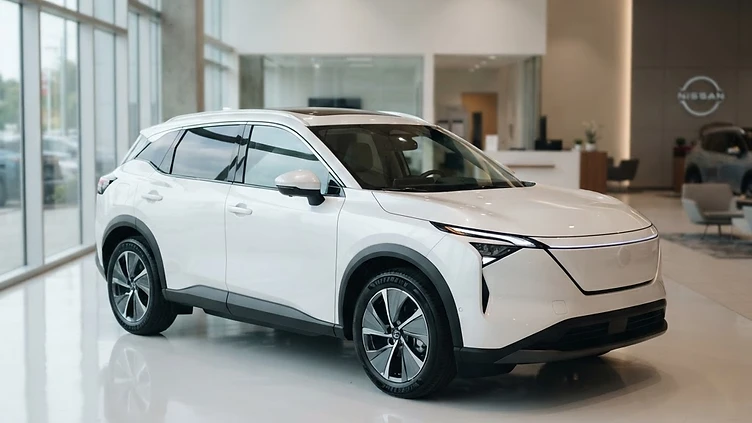
Should you lease or finance your next Nissan in Québec? There is no universal answer — the better choice depends on how long you keep a vehicle, how many kilometres you drive, and whether you want to own outright. At Saint-Nicolas Nissan, near Lévis, Sainte-Foy, Beauport, Laurier Station and Montmagny, we walk every client through the math. Here is the 2026 framework.
How financing works
When you finance, you borrow the purchase price (plus Québec's 14.975% sales tax on the financed amount) and repay it over a fixed term — typically 48 to 84 months — at an annual interest rate (APR). Once the loan is paid off, you own the vehicle free and clear.
The key trade-off is cash flow versus ownership. Your monthly payment is higher than a comparable lease because you are paying down the entire value of the vehicle, not just its depreciation. In exchange, every payment builds equity: at the end of the term the title is yours and you can keep driving payment-free for years, sell it privately, or trade it in toward your next purchase.
- Best when you keep a vehicle 5+ years
- No mileage limits
- You build equity and can trade or sell anytime
- Higher monthly payment than a comparable lease
How leasing works
A lease covers only the vehicle's depreciation over the term (usually 24–48 months) plus a money factor, the leasing equivalent of interest. You pay sales tax on each monthly payment rather than the full price up front, which lowers the cash outlay. At the end you return the vehicle or buy out the residual.
Leasing is essentially long-term rental of a new vehicle. Because you only pay for the portion of the car you actually use — the depreciation — the monthly cost drops dramatically versus financing the same vehicle. The catch is that you don't build equity: at the end of a closed-end lease you hand the keys back (or pay the residual to keep it). For many drivers who replace their vehicle every few years, the lower payment and constant warranty coverage more than make up for that.
- Best when you want lower monthly payments and a new vehicle every few years
- Annual mileage caps (commonly 16,000–24,000 km)
- No equity — you return the vehicle
- Warranty coverage for most of the term
The 2026 Québec math
Factor in Québec's combined sales tax of 14.975%. With financing, that tax applies to the full purchase price the day you sign, so it is rolled into the financed amount and you pay interest on it. With leasing, the tax is spread across each payment over the term, which improves monthly cash flow but slightly increases the total tax paid if the lease runs its full course.
There is also a residual-value component unique to leasing. Nissan sets the residual — the predicted value at the end of the term — and your monthly payment is based on the difference between today's price and that residual. When the market value at turn-in is below that residual, leasing usually worked in your favour. When it is above, you can often buy the vehicle at the locked-in residual and keep or resell it.
Rule of thumb: if you change vehicles every 3–4 years and drive within the mileage allowance, leasing almost always costs less per month. If you keep vehicles past the warranty and want no kilometre limits, financing is usually cheaper over the long run.
When leasing wins
Leasing shines for drivers who value predictability and driving new hardware. You always have a vehicle under warranty, you always have current safety technology, and the monthly outlay is consistently lower — which frees up cash for travel, a mortgage, or other priorities.
- You want the newest Nissan safety and infotainment tech every two to three years
- You drive under ~24,000 km/year
- You prefer predictable, lower monthly payments
- You can use the monthly savings toward a down payment on a home or other goals
When financing wins
Financing makes more sense when you treat a vehicle as a long-term asset. The depreciation curve flattens dramatically after the first five years, so a financed and paid-off Nissan driven for a decade is one of the cheapest per-kilometre ways to own a car.
- You keep your Nissan well past 7 years
- You drive high annual mileage
- You want to modify or customize the vehicle
- You dislike being under a kilometre cap
The third option: lease then buy
Many clients lease a Nissan Rogue, Pathfinder or ARIYA for 36 months, then exercise the residual buyout if (as is common) the buyout price is below market value at term-end. It is a flexible bridge between the two strategies: you enjoyed the low lease payment while the depreciation was steepest, and you can convert to ownership once the residual numbers favour you.
Next step
Use our loan calculator to model both scenarios on a specific vehicle, then browse live inventory and ask us for a side-by-side lease-vs-finance quote. We will show you both numbers, with taxes, side by side — no pressure.
Browse live inventory or book a test drive.
Close to Lévis, Sainte-Foy, Beauport, Laurier Station and Montmagny — financing, leasing and test drives on site.